
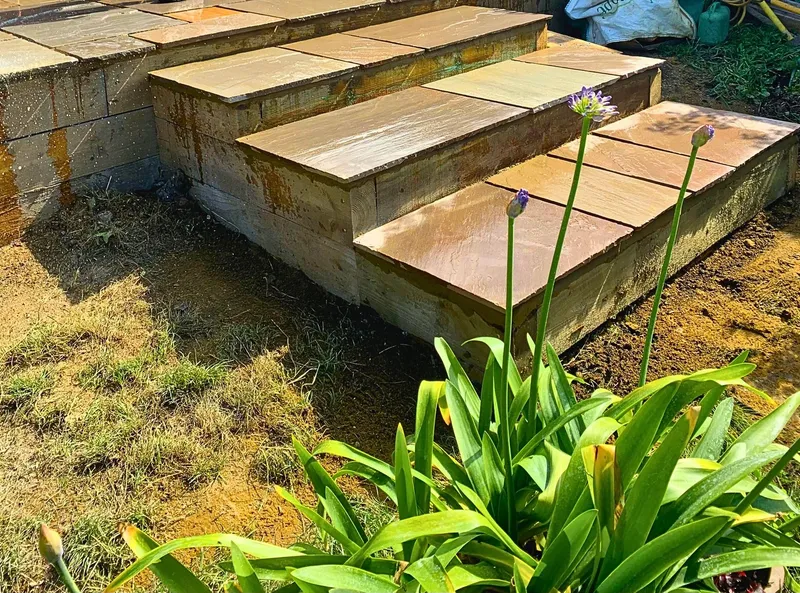
Garden Steps for a Sloping Garden: Ideas and Advice
A slope doesn't have to be a problem. Well-planned garden steps make every level easy to reach, and they can be a feature in their own right.
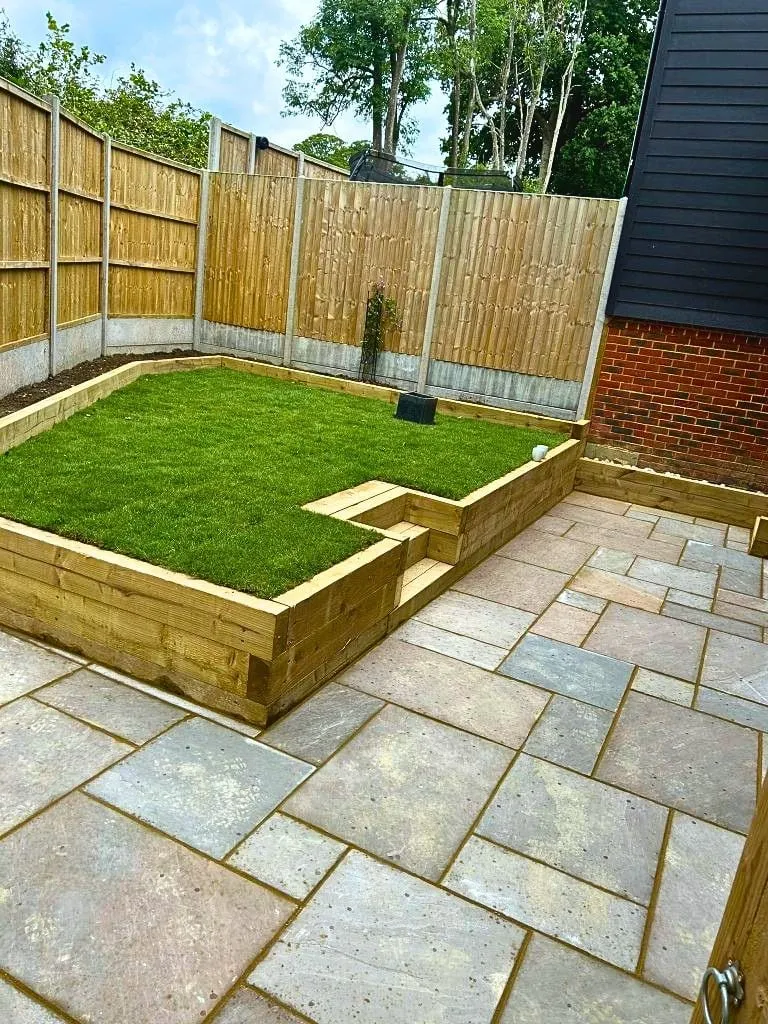
Close board fencing is one of the strongest and most private timber fences you can put up. It's the solid, vertical-board fence you see along many back gardens in Kent.
It's made from overlapping boards fixed to rails between sturdy posts. This style is also called featheredge fencing. Built well, it stands up to wind and keeps the garden private for many years.
Below, we explain how it's built and how it compares with ready-made panels. We also cover what makes a fence last, rather than lean after a few winters.
A close board fence has three parts. First, posts are set in the ground, usually about every three metres. Next, horizontal rails run between the posts. These are often called arris rails. Finally, vertical boards are nailed to the rails, each one overlapping the next.
The boards are called featheredge, because one edge is thicker than the other. Overlapping them leaves no gaps. That's why the fence is so private, and so good at blocking wind and noise.
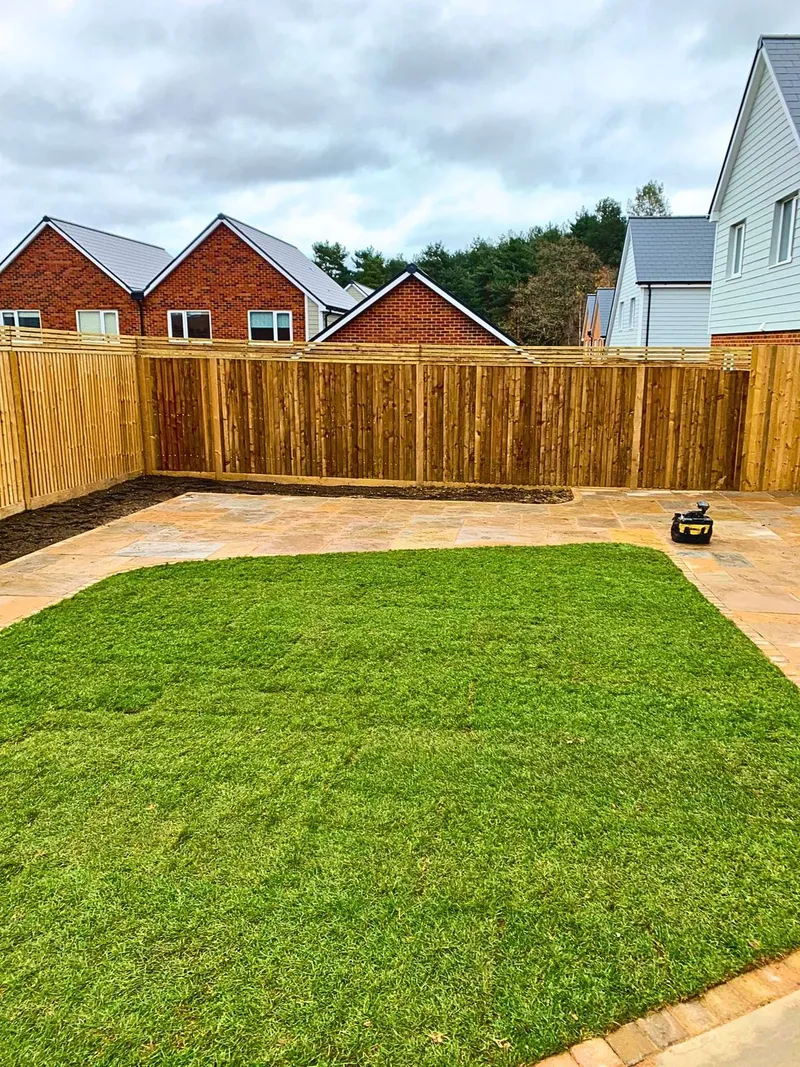
You can have the fence built on site, board by board. Or you can buy ready-made panels that slot between the posts. Both have their place.
Each board is nailed to the rails in place, so the whole fence works as one structure. That makes it stronger. It can also follow a sloping garden smoothly, rather than stepping down in blocks. If a board is ever damaged, it can be replaced on its own.
Close board panels are made in a factory and fixed between posts. They're quicker to put up. That makes them a good choice for shorter runs or tight timescales. On a slope, panels step down, so the top of the fence forms a series of steps.
Most fences fail at the bottom. Timber posts rot where they meet the soil, and boards that touch the ground soak up water. After a few wet winters, the fence starts to lean. Then the next storm finishes it off.
Good fence installation is mostly about the parts you don't notice. These are the things that make the difference:
On heavy Wealden clay, the ground moves as it wets and dries. Deep, solid footings matter even more here, because a shallow post soon starts to tilt.
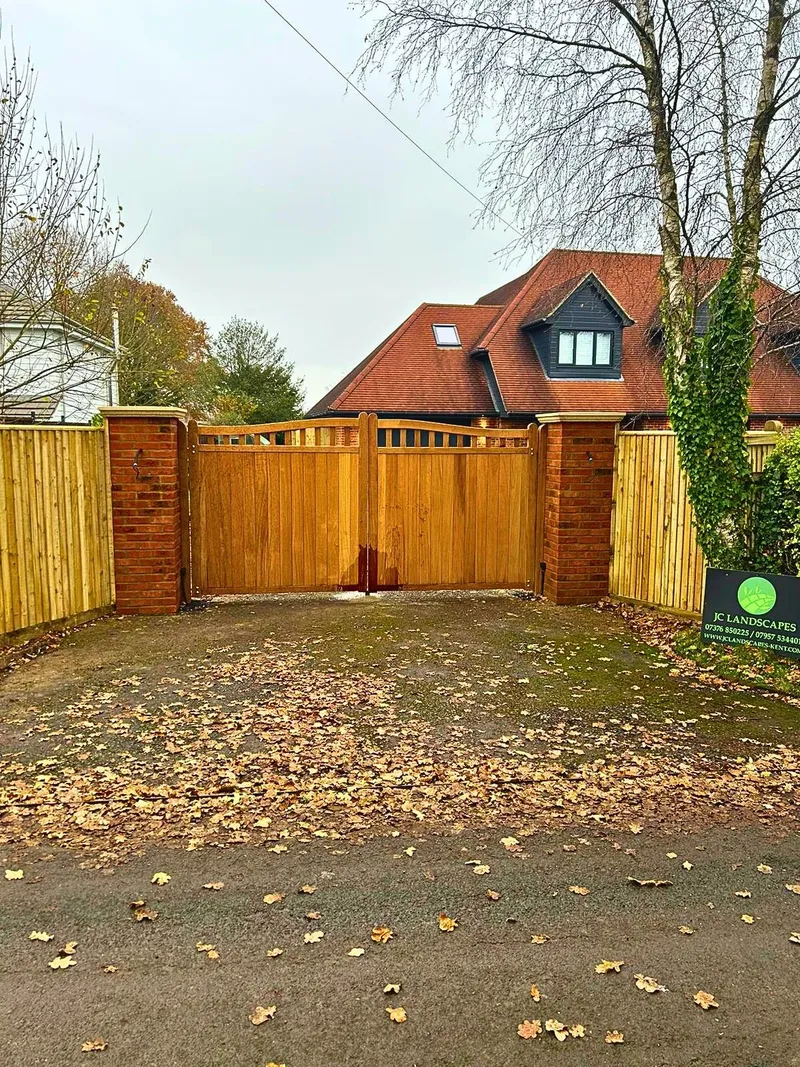
A well-built close board fence needs very little care. A few simple habits keep it looking good for longer.
New timber starts out pale. It weathers to a soft silver-grey within a year or two if left untreated.
Close board is not the only option. Each type of fence suits a different garden, so it helps to know the alternatives.
Lap panels use thin, horizontal boards woven or overlapped in a frame. They are light and cheaper to buy, but they are less sturdy and less private. In exposed gardens, they can struggle in strong winds.
Slatted fencing uses horizontal boards with small gaps between them. It gives a modern look and lets some light and air through. It suits patios and contemporary gardens.
Post and rail marks a boundary without hiding the view. It suits fields, paddocks and large front gardens, where privacy matters less.
Composite fencing is made from wood fibre and plastic. It does not rot or need treating, but it costs more to buy than timber.
For most back gardens, close board fencing is the best balance of strength, privacy and value.
Replacing a fence is usually quicker than people expect. A typical back-garden run takes a day or two.
First, the old panels come down and the old posts are dug out. New posts then go in, set in concrete and lined up so the run is straight. Once they are firm, the gravel boards, rails and boards go on. Finally, any gate is hung and the old fence is taken away.
It helps to clear plants and furniture from the boundary beforehand. Let your neighbour know too, as some work may happen from their side.
In most back gardens, a fence up to two metres high doesn't need planning permission. Next to a road or footpath, the limit is usually one metre. Different rules can apply to listed buildings and some new-build estates. Check your deeds if you're unsure. The Planning Portal has a clear guide.
It's also worth agreeing the line of the fence with your neighbour before work starts. Your deeds may show which boundaries are yours.
If you want privacy, shelter and a fence that lasts, close board fencing is hard to beat. It suits most gardens, from new estates to country plots. Where you'd like to keep a view open, post and rail or a lower fence may suit better.
See our fencing page for the types we fit. For local work, see our Tunbridge Wells fencing page.
They're usually the same thing. A close board fence is built from featheredge boards, overlapped and nailed to rails between posts.
Built on site, board by board, it's stronger than most ready-made panels. The boards and rails are fixed together as one structure. Panels are a good, quicker option for shorter runs.
For most gardens, yes. Concrete posts don't rot at ground level, which is where most timber posts fail. They also stand up well to wind.
Yes. On a fence built board by board, single boards can be replaced. On a panel fence, a damaged panel can be swapped out.
Matt and the boys were outstanding. He helped me design my small garden to give it the illusion of being bigger. Brilliant paved area with timber sleeper planter around the fence line. They were always on time and produced first class work. I woul highly recommend Matt and the team. Thanks for everything
My new fencing and patio looks amazing. Excellent work, completed job on time. I would highly recommend.
Recently had our entire garden renovated with Matt and his team. First of all the entire team were so polite, friendly and respectful of neighbours and keeping everything tidy. Their pricing was very reasonable considering the amount of work we had done. After meeting Matt and having a consultation he went through everything with us in detail and it is clear the level of experience and knowledge he has in his trade, as does he’s highly skilled team. They have completely transformed our garden to our dream garden and the biggest bonus being it was within our budget so we didn’t have to do it in stages as we first thought ! Thankyou - we will be getting you back for the driveway :)
Joe and his team done a very good job on our garden Indian sandstone patio and very reasonably priced will most definitely use them again for future projects
I can not speak highly enough of Joe, Matt and the team, they transformed an ugly wasteland of garden into my little corner of paradise, they were so patient with my dithering and inability to make decisions, they gave excellent advice and nothing was too much trouble. The whole team were polite and friendly. Thank you so much guys.
Joe and his team have done a great job clearing and prepping our garden for future landscaping works. Joe was very patient with our various requests and changes and more than happy to break down the job for us into different stages so we can manage the cost. The lads worked really efficiently, arrived when they said they work and left a very tidy site behind. We will definitely be using Joe and Matt again for future works.
After issues with a previous Landscaper, we found and contacted Joe and Matt. They provided a prompt, detailed and reasonable quote. Their work and approach to our project was professional and of good quality. We thank them for their hardwork and would highly recommend them.
Had a patio driveway done by Joe and his team recently, cannot fault his work or how professional he was, kept me up to date with everything going on, I now wouldn’t use anyone else for any landscape work, highly recommended, extremely happy!
I highly recommend this business for its excellent service, I had a driveway put in, the quality of materials exceeds my expectations the team went above and beyond to provide us with customer satisfaction and loyalty, I was extremely happy with the results. I will be using them again.
Joe and Matt have been great from start to finish. Effective communication, courteous, polite. They got the job done efficiently and left everything tidy. Would definitely use them again.
Great job by JC and sons clearing our back garden of mature shrubs, roses etc and hedge cutting. Done in double quick time and taking everything away.. not a leaf or twig left! Would highly recommend.
Joe, Matt and team were great. They were detail oriented, fast, and made suggestions that gave us a beautiful front driveway. Highly recommend!
NEW PATIO. Excellent work for a very reasonable price. Not only polite but very professional, polite and clean and tidy at the end of the working day. I would highly recommend without hesitatition.
Very happy with the work they have completed have used them on a few occasions now and will definitely use again very friendly and can’t do enough for you clean and tidy 👍
I would highly recommend. Very professional and punctual. Rates are very competitive and a professional finish. Well done guys will use you again on my next project
Had in to turf and tidy up my garden top quality work carried out, extra effort to get the top quality finnish on the job
Joe and the team were fantastic when they turned up and done a patio job for us, would recommend to anyone
Excellent service and job completed to a very high standard; garden left exceptionally tidy. Great team
Friendly efficient reliable workers .. a great job well done . I would definitely recommend them .
Cannot fault JC Landscapes. Professional, friendly and punctual I would definitely use their services again.
A slope doesn't have to be a problem. Well-planned garden steps make every level easy to reach, and they can be a feature in their own right.
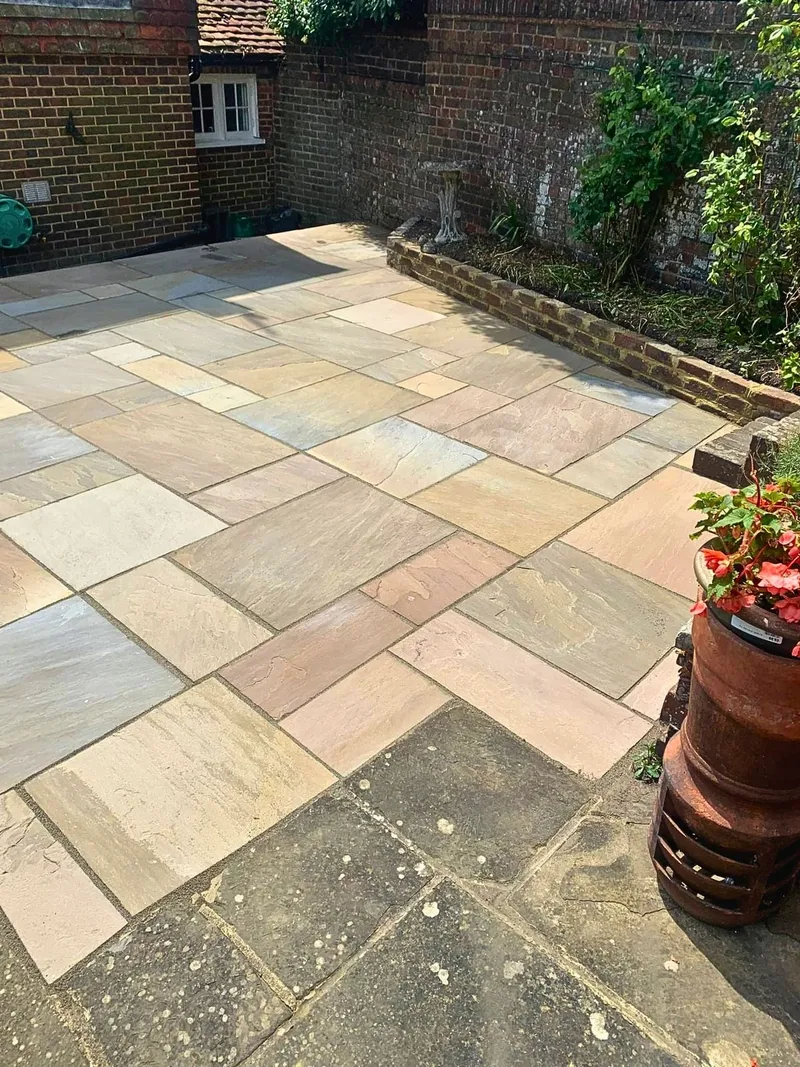
Both make a beautiful patio, but they look, wear and need looking after differently. Here's how to choose between Indian sandstone and porcelain.
We'll measure up, talk you through the options and send a written quote. Tell us a little about your garden and we'll get back to you within 24 hours to arrange a free visit and quote.
Prefer to talk? Call us on 07828 731270 or email info@jclandscapes-kent.com.