
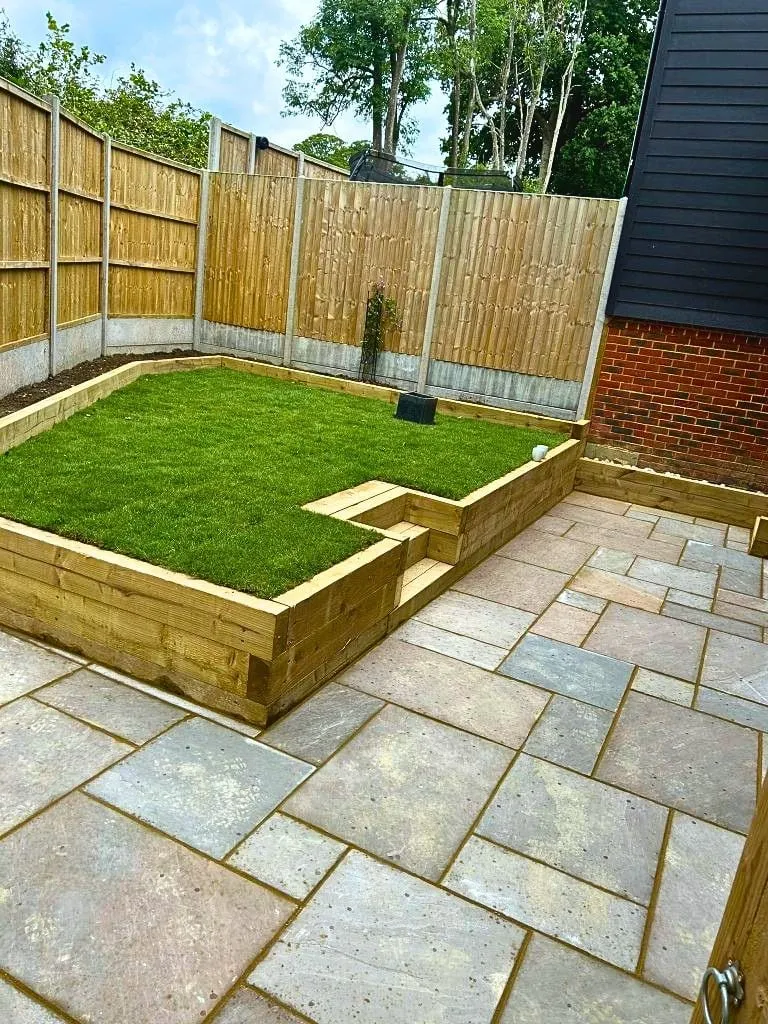
Close Board Fencing: What It Is and Why It Lasts
Close board fencing is one of the strongest timber fences you can put up. Here's how it's built, how it compares with panels and how to make it last.
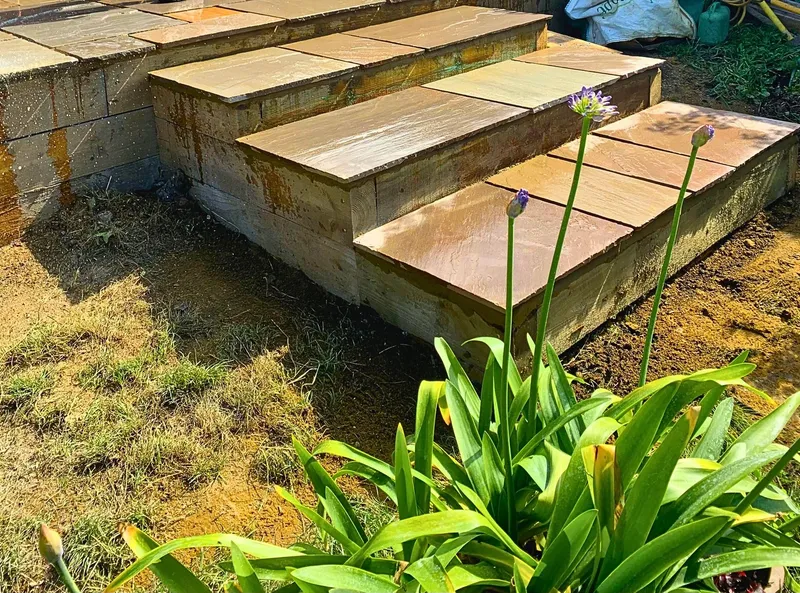
Plenty of gardens across the Weald slope, either up from the house or down to the boundary. A slope makes a garden harder to use. But it doesn't have to be a problem.
Well-planned garden steps link the levels, so every part of the garden is easy to reach. Done well, they become a feature. They frame the view and give you somewhere to perch with a cup of tea.
Here's how to plan outdoor steps that are comfortable, safe and suit your garden.
The most important thing is the size of each step. The rise is the height of each step. The tread is the depth you put your foot on. Outdoor steps feel best when they're lower and deeper than indoor stairs.
Will you carry trays, push a wheelbarrow or help older relatives up and down? Then go shallower and wider still.
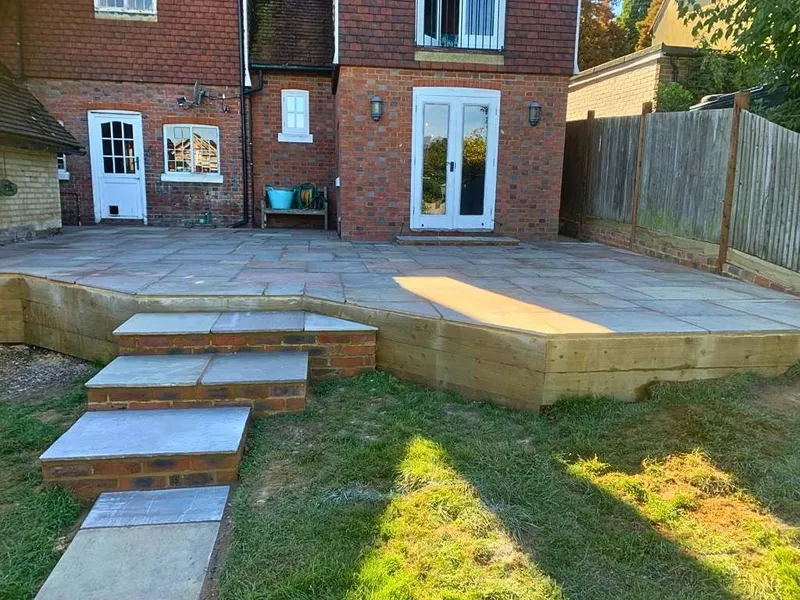
Sandstone or limestone treads look smart and last for decades. Matching them to the patio ties the garden together. Riven stone also gives good grip, which matters on steps.
Brick steps suit older houses and cottage gardens. They look especially good with a stone tread on top. Brick also works well for low walls either side of a flight.
Sleepers are a quick, natural-looking way to build steps into a bank. They pair well with raised beds and sleeper retaining walls, and they suit relaxed family gardens. Timber can get slippery in the shade, so a gravel infill on each tread helps.
Where steps link a drive to the front door, blocks in the same colour keep everything consistent.
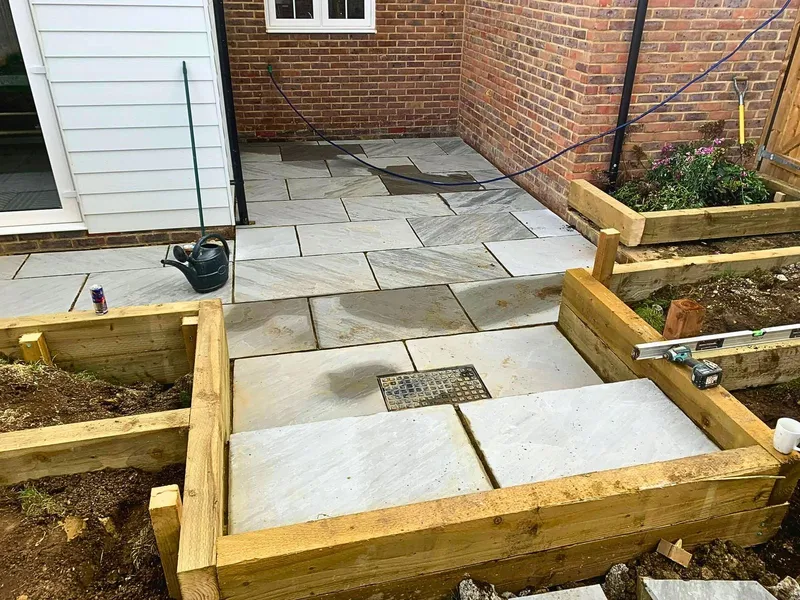
Steps need the same care as a patio. Each one sits on a firm, compacted base. The treads are bedded fully in mortar, so they don't rock or crack.
Each tread should also have a slight fall, so rain runs off rather than pooling where you step. On clay soil, which is common across Kent, good drainage at the bottom of a flight matters too. Otherwise water collects where the steps meet the lawn.
Before choosing materials, think about where the steps should go. The best steps for a sloping garden follow the way you naturally walk. They might lead from the back door to the lawn. Or they might run from the patio to a seat at the far end.
A curve or a change of direction can make a flight feel gentler. It also adds interest, so the garden reveals itself as you go.
Planting softens the hard edges of a flight and helps it sit naturally in the garden. Low, spreading plants along the sides blur the line between step and border.
Keep plants back from the treads themselves, so nobody catches a foot. And choose plants that suit the light, as steps often sit in shade for part of the day.
Steps do not have to be one material. Some of the best flights combine two or three.
Brick risers with stone treads give a classic look. Sleeper risers with gravel treads feel relaxed and natural. Stone treads set into a lawn, called stepping-stone steps, work well on a gentle slope.
Whatever you choose, link it to the rest of the garden. Use the same stone as the patio, or the same brick as the house. Then the steps feel part of the design.
On a steep garden, steps alone may not be enough. Terracing breaks the slope into flat levels held by retaining walls in brick, stone or sleepers. Each level becomes usable space, with steps linking them.
That space might be a patio, a lawn or a bed for planting. Terracing is more work than one flight of steps. But it can turn a hard-to-use garden into one with several distinct areas.
Most garden steps do not need planning permission. They count as landscaping within your garden.
Raised platforms are different. A patio or deck more than 30 cm above the ground may need permission. Any steps up to it count as part of it too. Listed buildings and conservation areas can also have their own rules. If you are unsure, check with your local council before work starts. The Planning Portal also explains the rules for decking and raised platforms in plain English.
Steps leading to a front door from a public path may also need thought. Keep them clear of the pavement, and make sure they do not send rainwater onto it. A small channel or gravel strip at the bottom can catch the run-off.
Planning steps, a patio or a whole sloping garden? See our garden walls and steps and garden design pages. For local examples, see our Wadhurst and Mayfield pages, where many gardens slope. The RHS also has plenty of design ideas.
Outdoors, a rise of around 10 to 15 cm per step is comfortable. Each tread should be at least 30 to 40 cm deep. Keep every step in a flight the same height.
Natural stone, brick, timber sleepers and block paving all work well. Stone and brick last longest, while sleepers are quick and natural-looking.
Yes. Each step needs a firm, compacted base. Stone or brick steps should be bedded fully in mortar, so they don't move or crack.
Yes. Steps can be cut into a bank and built in brick, stone or sleepers. On a steep slope, terraces with retaining walls often work better.
Recently had our entire garden renovated with Matt and his team. First of all the entire team were so polite, friendly and respectful of neighbours and keeping everything tidy. Their pricing was very reasonable considering the amount of work we had done. After meeting Matt and having a consultation he went through everything with us in detail and it is clear the level of experience and knowledge he has in his trade, as does he’s highly skilled team. They have completely transformed our garden to our dream garden and the biggest bonus being it was within our budget so we didn’t have to do it in stages as we first thought ! Thankyou - we will be getting you back for the driveway :)
Joe and his team done a very good job on our garden Indian sandstone patio and very reasonably priced will most definitely use them again for future projects
I can not speak highly enough of Joe, Matt and the team, they transformed an ugly wasteland of garden into my little corner of paradise, they were so patient with my dithering and inability to make decisions, they gave excellent advice and nothing was too much trouble. The whole team were polite and friendly. Thank you so much guys.
Matt and the boys were outstanding. He helped me design my small garden to give it the illusion of being bigger. Brilliant paved area with timber sleeper planter around the fence line. They were always on time and produced first class work. I woul highly recommend Matt and the team. Thanks for everything
Joe and his team have done a great job clearing and prepping our garden for future landscaping works. Joe was very patient with our various requests and changes and more than happy to break down the job for us into different stages so we can manage the cost. The lads worked really efficiently, arrived when they said they work and left a very tidy site behind. We will definitely be using Joe and Matt again for future works.
After issues with a previous Landscaper, we found and contacted Joe and Matt. They provided a prompt, detailed and reasonable quote. Their work and approach to our project was professional and of good quality. We thank them for their hardwork and would highly recommend them.
Had a patio driveway done by Joe and his team recently, cannot fault his work or how professional he was, kept me up to date with everything going on, I now wouldn’t use anyone else for any landscape work, highly recommended, extremely happy!
I highly recommend this business for its excellent service, I had a driveway put in, the quality of materials exceeds my expectations the team went above and beyond to provide us with customer satisfaction and loyalty, I was extremely happy with the results. I will be using them again.
Joe and Matt have been great from start to finish. Effective communication, courteous, polite. They got the job done efficiently and left everything tidy. Would definitely use them again.
Great job by JC and sons clearing our back garden of mature shrubs, roses etc and hedge cutting. Done in double quick time and taking everything away.. not a leaf or twig left! Would highly recommend.
Joe, Matt and team were great. They were detail oriented, fast, and made suggestions that gave us a beautiful front driveway. Highly recommend!
NEW PATIO. Excellent work for a very reasonable price. Not only polite but very professional, polite and clean and tidy at the end of the working day. I would highly recommend without hesitatition.
Very happy with the work they have completed have used them on a few occasions now and will definitely use again very friendly and can’t do enough for you clean and tidy 👍
I would highly recommend. Very professional and punctual. Rates are very competitive and a professional finish. Well done guys will use you again on my next project
My new fencing and patio looks amazing. Excellent work, completed job on time. I would highly recommend.
Had in to turf and tidy up my garden top quality work carried out, extra effort to get the top quality finnish on the job
Joe and the team were fantastic when they turned up and done a patio job for us, would recommend to anyone
Excellent service and job completed to a very high standard; garden left exceptionally tidy. Great team
Friendly efficient reliable workers .. a great job well done . I would definitely recommend them .
Cannot fault JC Landscapes. Professional, friendly and punctual I would definitely use their services again.
Close board fencing is one of the strongest timber fences you can put up. Here's how it's built, how it compares with panels and how to make it last.
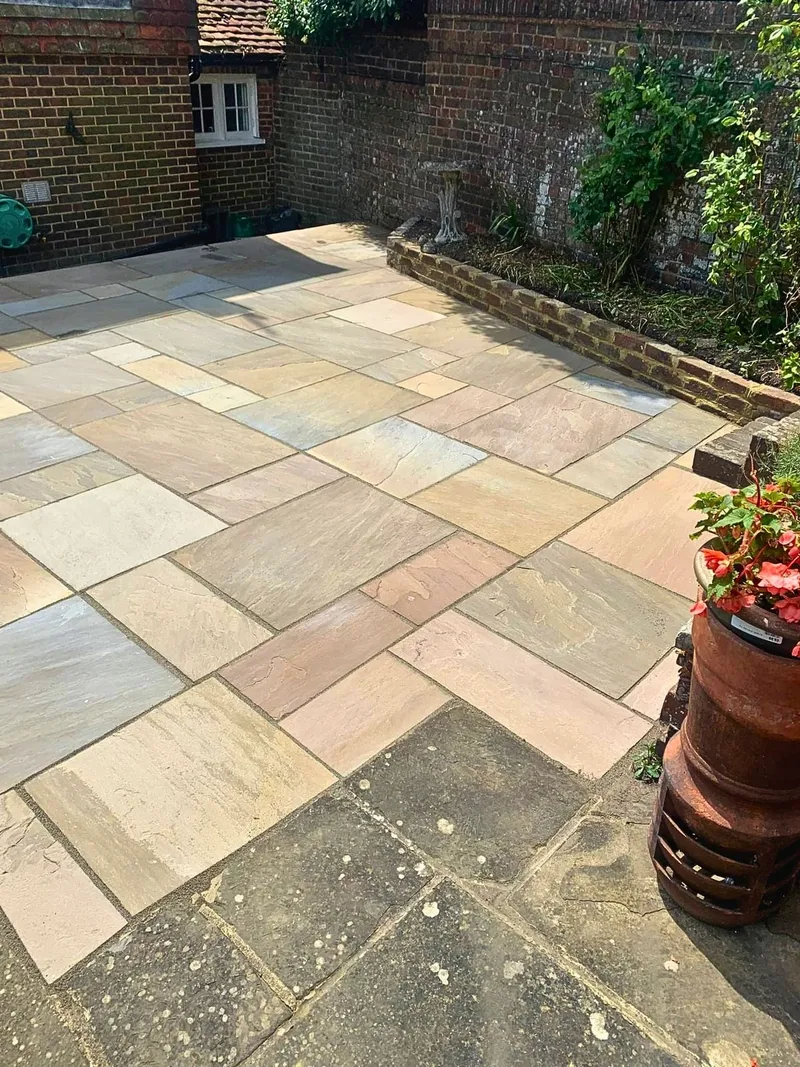
Both make a beautiful patio, but they look, wear and need looking after differently. Here's how to choose between Indian sandstone and porcelain.
We'll visit, look at the levels with you and draw up a free plan. Tell us a little about your garden and we'll get back to you within 24 hours to arrange a free visit and quote.
Prefer to talk? Call us on 07828 731270 or email info@jclandscapes-kent.com.